Ever since China was split in two in 1949 following the Chinese Civil War, relations between the two sides of the strait have undergone significant shifts throughout the decades that ensued.
In the 50s, the People’s Republic of China (PRC) continuously bombarded the Republic of China (ROC)’s smaller islands, because while the establishment of the PRC in 1949 supposedly brought the civil war to an “end”, the war continued on for decades in reality. When the ROC government began invoking the possibility of so-called Taiwan independence in the mid-2000s, Beijing reacted by passing an “anti-secession” law in 2005, committing to the full-on invasion of Taiwan should it deem necessary, and tension between the two sides increased significantly.
Then, when Taiwan elected Ma Ying-jeou as their President in 2008, relations between the ROC and the PRC turned eerily peaceful. Direct commercial flights resumed the following year, governmental communications increased, and economic cooperation grew closer than ever between the once bitter enemies. However, when President Tsai Ing-wen was elected into office earlier this year, relations between the two sides shifted once again.
Although Tsai Ing-wen is part of the pro-Taiwan independence Democratic Progressive Party (DPP), she has promised to take a more moderate approach on cross-strait relations and committed to maintain status quo.
However, it seems like the PRC isn’t buying her proposal so far, and not without reason.
While Tsai has said on various occasions that she is determined to maintain status-quo, she has made some questionable moves since taking office. She said during an interview with the Wall Street Journal that Taiwan will not “succumb to the pressure from China”, and soon after reiterated in a letter to her fellow party members that they must “fight against the pressure of China”, continuously referring to the PRC as just “China” instead of “Mainland China”. Just this month, she nominated three Constitutional Court Justices who do not accept the existence of the Republic of China, two of them even refusing to sing the national anthem. On top of all this, Tsai still refuses to accept the “1992 Consensus” principle of “one China, two interpretations”, an agreement that the Mainland sees as the precondition of any cross-strait negotiation.
Unsurprisingly, Beijing has reacted quite fiercely yet cautiously to Tsai’s questionable tactics.
Since Tsai took office in May earlier this year, the number of Mainland Chinese tourists visiting Taiwan has decreased by nearly 40 percent, causing losses of billions of New Taiwanese Dollars in the tourism industry. Although Tsai’s government has tried imposing fewer restrictions on Mainland tourists, such as reducing quotas, to encourage their visit, the amount of visitors has still continued to decrease. It is an extremely clever move from the PRC politically speaking, since the tourism industry does not make up much of Taiwan’s GDP, yet its decline is visible enough to upset the Taiwanese people and businesses, putting internal pressure on the new government.
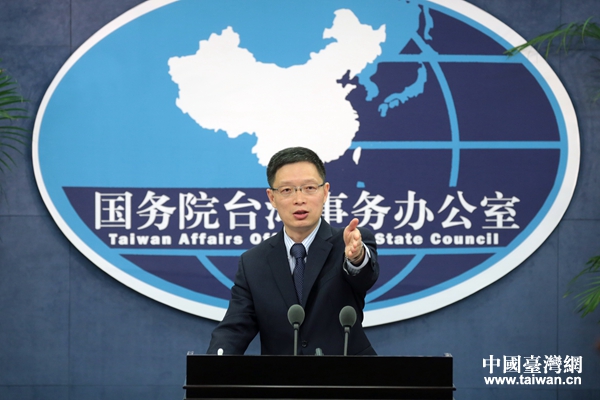
Official communications have also been cut since the Ma administration left office. While lower level cooperation still exists between a few government agencies, the “hotline” between the ROC’s Ministry of Mainland Affairs and the PRC’s “Taiwan Affairs” Office, which at one point even helped facilitate the historic meeting between President Ma and President Xi last November, have not been in use for the past 5 months. While it was established as recent as 2014, the hotline was a symbol for a new era of peaceful relations, something Tsai had promised to build on. With the line now cut, fears of uncertainty in cross-strait relations are once again on the rise within Taiwan.
Perhaps more worrying, however, is the increased pressure that the PRC has put on Taiwan in the international community. Just last month, Taiwan was barred from taking part in the International Civil Aviation Organization (ICAO) conference in Vancouver, which Taiwan had participated in 2013. Some countries even revealed that they were specifically told to not bring up Taiwan during the conference, unveiling Beijing’s determination of putting pressure on the Tsai government.
The next move to anticipate from the PRC is whether or not they will allow Taiwan to send its envoy to this year’s Asia-Pacific Economic Cooperation (APEC) summit, and organization which Taiwan is a member of. Although Tsai has announced James Soong, a veteran pro-China politician, as the envoy this year, the PRC has yet to signal its approval.
For now, it seems that unless Tsai-Ing Wen can begin proving to Beijing with concrete actions that she at least supports the status quo and isn’t secretly planning another attempt at “Taiwan-independence”, then cross-strait relations will reach stalemate or possibly even continue to deteriorate in the years to come.
 The Taiwan Perspective